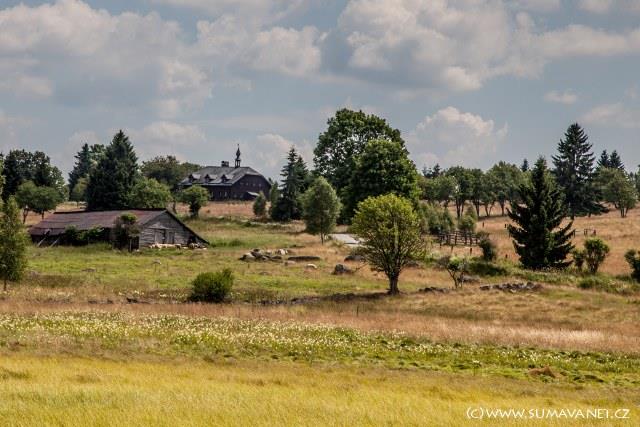
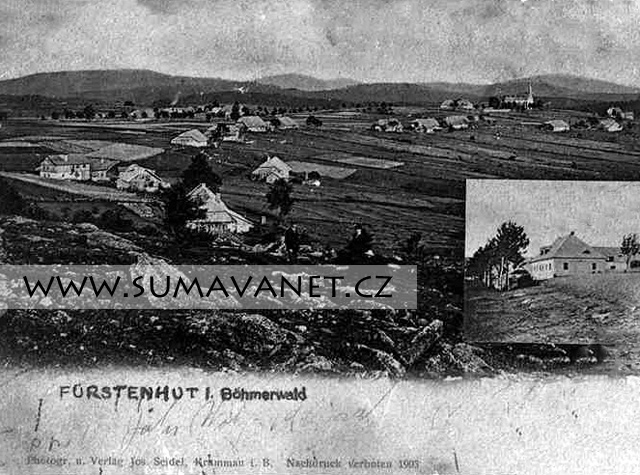
At an elevation of 1024 m, a new logging settlement was gradually established from 1795 on a site called Schöne Ebene (“Beautiful Viewpoint”), by order of Prince Schwarzenberg. It was named Fürstenhut; the Czech name Knížecí Pláně appeared only in 1877.
According to legend, Prince Schwarzenberg visited the area during its founding. A strong wind blew off his hat, which got stuck in a tall fir tree. A local lumberjack climbed the tree and returned it. To commemorate the event, the new settlement was named Fürstenhut (“Prince’s Hat”).
In 1824, a wooden church dedicated to St. John the Baptist was built. By 1840, there were already 59 houses and 521 inhabitants. The village had a school, town hall, four pubs, a gamekeeper’s lodge, forest house, mill, sawmill, and a border guard station.
In 1850, the village came under the administration of Kunžvart; from 1902, it had its own municipal office again.
Between 1861 and 1864, a stone Church of St. John the Baptist was built to replace the burned wooden one. A parish was established in 1865. The village then had 60 houses and 725 residents. Although it continued to grow, the population began to decline.
A post office was established in 1913.
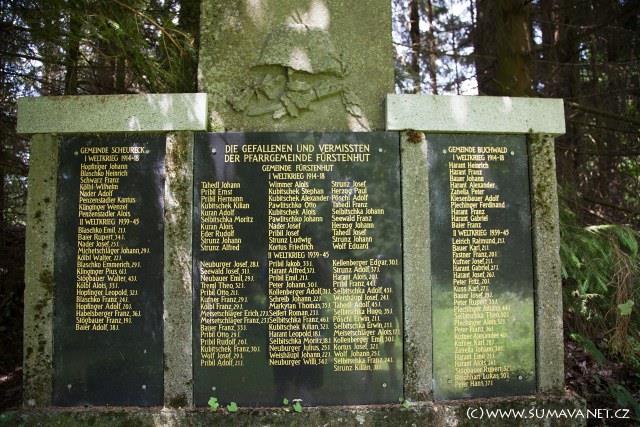
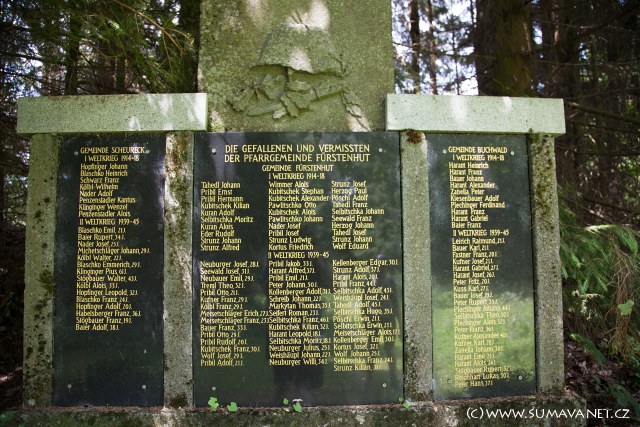
Thirty local men died in World War I; in 1936, a memorial was erected in their honor.
In 1930, the village had 75 houses and 458 inhabitants, most of them German. Only nine were of Czech nationality.
During World War II, 46 more local men died. Toward the end of the war, Robert Steinhauser, head of the Czech Budejovice Gestapo, hid with his wife in one of the cottages. After the U.S. Army occupied the area, most German residents fled with their belongings. Only 58 remained, hoping their loyalty to Czechoslovakia would spare them expulsion – it did not. In 1946, they were deported.
Forester Jan Hrdlička took over, and until 1949 he helped Czech citizens cross into Bavaria near boundary marker No. 14.
In 1947, 57 people still lived in Knížecí Pláně and a school was in operation. But the establishment of the restricted border zone marked the end of the village.
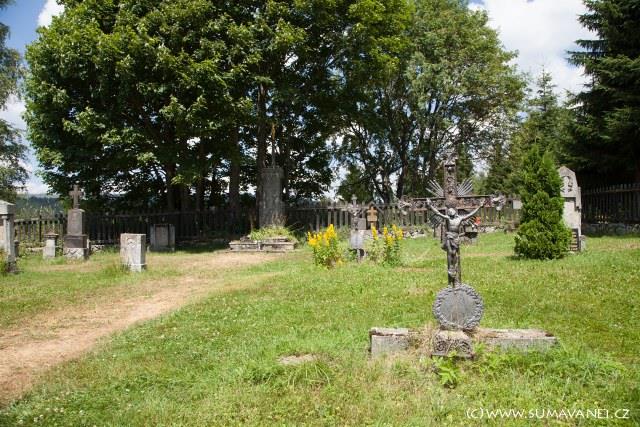
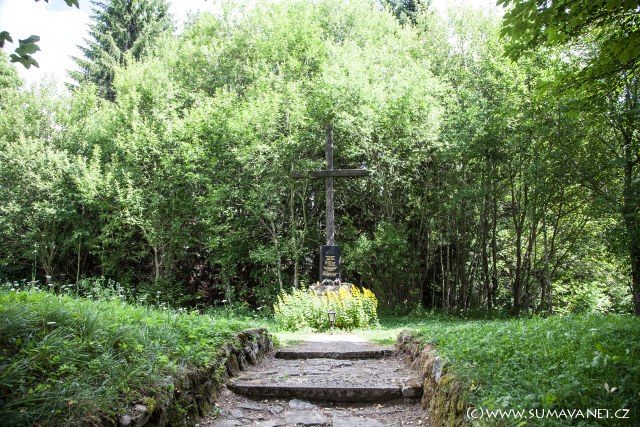
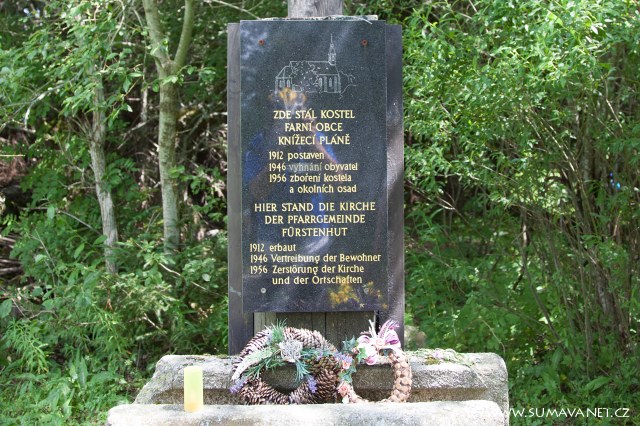
In 1950, the last mass was celebrated by priest Karel Fořt. In 1956, the Church of St. John the Baptist was demolished. The rectory and cemetery were also destroyed. Other buildings followed, leaving only one structure near the gamekeeper’s lodge, used for stabling horses and cattle of the state forests.
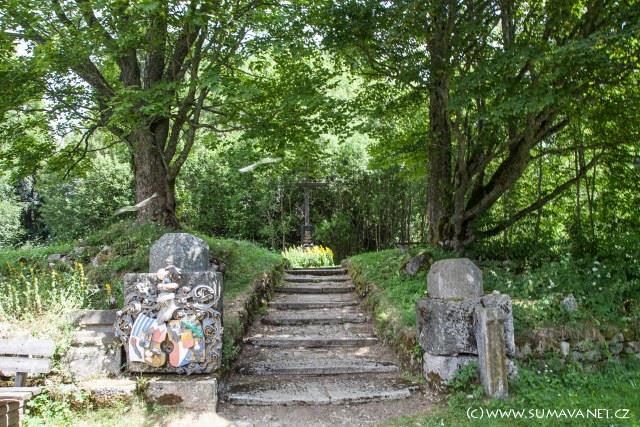
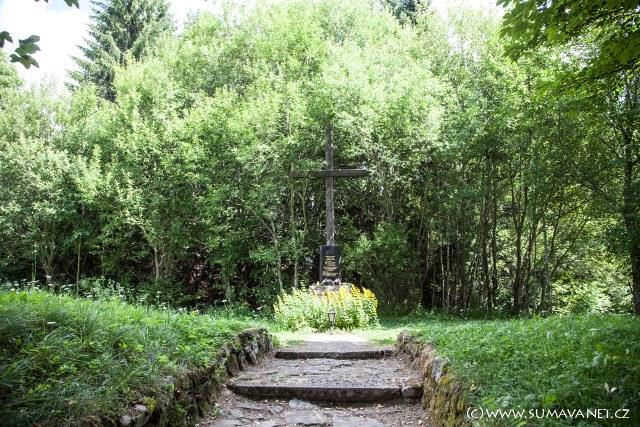
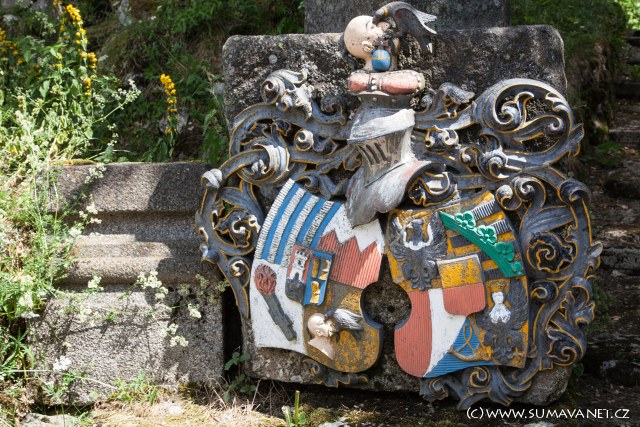
Thanks to the care of German natives, the cemetery was restored in 1992. The foundations of the church’s front wall were rebuilt, featuring the restored Schwarzenberg family crest and a large cross.
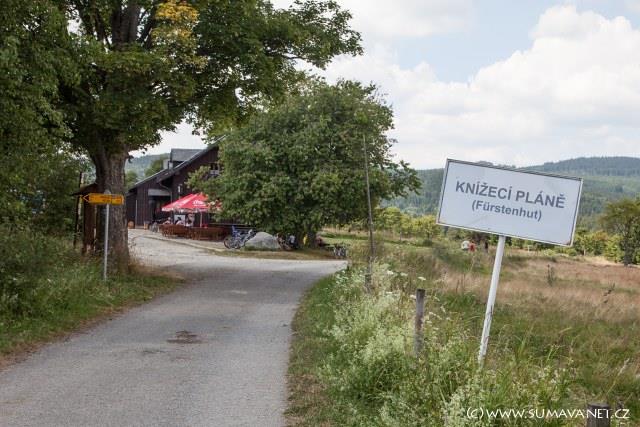
Today, the functioning “Hájenka” restaurant stands on the site of the former forester’s house.
Knížecí Pláně is part of the municipality of Borová Lada and serves as an important crossroads for hiking and cycling routes.
Note: In 1950, the young priest Karel Fořt narrowly escaped capture by state security and fled across the border. After missionary work in Algeria, he settled in Germany and became a key figure in the Czech exile community. He built support centers for émigrés and was widely known from Radio Free Europe broadcasts as “Father Karel.”